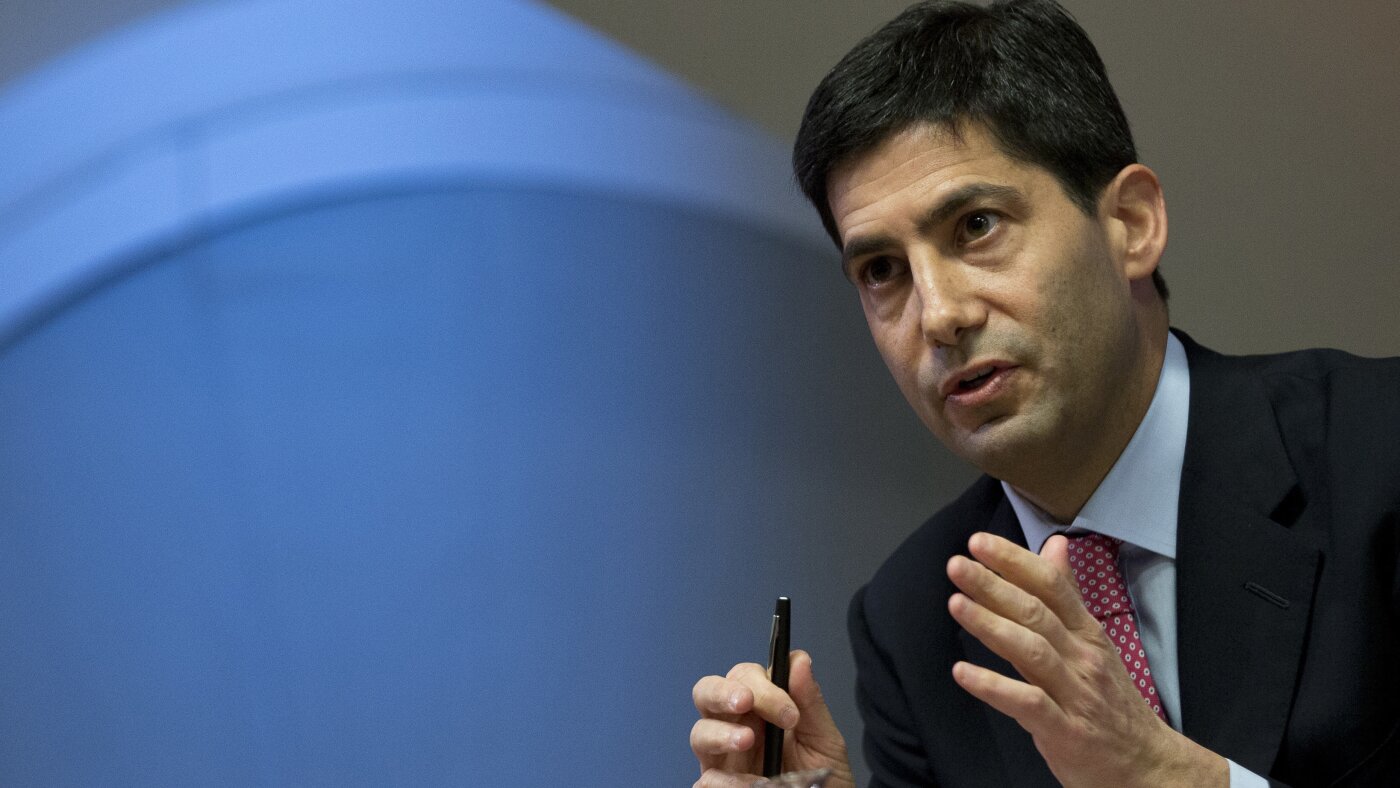
Trump Taps Kevin Warsh: A Hawkish Bet for the Federal Reserve's Future
President Donald Trump's decision to name Kevin Warsh as his intended nominee for Chair of the Board of Governors of the Federal Reserve System on January 30, 2026, signals a potentially dramatic shift in the central bank's direction. This move, poised to succeed current Chair Jerome Powell, underscores escalating tensions over monetary policy and the White House's persistent desire for a more accommodating approach to interest rates. While the formal submission to the Senate was delayed until March 4, the announcement immediately sparked widespread discussion about the future of the US economy under a
Kevin Warsh Fed. Warsh, known for his hawkish stance on interest rates during his previous tenure as a Fed Governor and his subsequent vocal criticism of the institution's recent strategies, represents a calculated, and perhaps confrontational, bet by the administration to reshape the nation's economic leadership.
The nomination emerges against a backdrop of moderate economic growth, stabilizing unemployment, and stubborn inflation concerns in early 2026. If confirmed, Warsh's leadership could usher in a new era of monetary policy, potentially prioritizing inflation control with a more aggressive hand, contrasting sharply with the often-deliberate pace of the Powell Fed. This appointment is not merely a change in personnel; it's a strategic move that could redefine the central bank's independence and its response to ongoing economic challenges.
The Hawkish Bet: Why Kevin Warsh for Fed Chair?
The choice of Kevin Warsh is no accident; it reflects President Trump's long-standing frustration with the Federal Reserve's monetary policy, particularly his public pressure on Jerome Powell to lower interest rates. Warsh, who was considered for the role during Trump's first term, embodies a distinctly different philosophy from the outgoing Chair. His reputation as a "hawk" suggests a predisposition to favor tighter monetary policy—meaning higher interest rates and a more cautious approach to quantitative easing—as a primary tool to combat inflation. This aligns with a segment of economic thought that argues for proactive measures against rising prices, even if it entails some moderation in economic growth.
Warsh's hawkish tendencies manifest in several key areas:
* **Inflation Vigilance:** He has consistently voiced concerns about inflationary pressures, particularly in the wake of the Fed's expansive balance sheet and prolonged low-interest-rate environment post-2008. His potential leadership would likely see a heightened focus on producer price trends and other inflation indicators, with a greater willingness to act decisively to temper price increases.
* **Skepticism of Unconventional Tools:** While he played a role in crisis response, Warsh has been critical of the extent and duration of unconventional monetary policies like large-scale asset purchases (quantitative easing) used by the Fed in recent years. This suggests he might be less inclined to resort to such measures or would unwind them more swiftly.
* **Fiscal Prudence:** Hawkish stances often extend to advocating for greater fiscal discipline from the government, believing that excessive government spending can fuel inflation and complicate monetary policy. While the Fed cannot directly control fiscal policy, a hawsh Chair might use the bully pulpit to encourage fiscal responsibility.
For President Trump, Warsh represents a potential agent for policy shifts that align with the administration's economic goals, even if those goals—like perpetually lower interest rates—might conflict with a purely hawkish agenda. The tension between political desires and the traditional independence of the Fed would likely be a defining characteristic of a
Kevin Warsh Fed. Investors and businesses should pay close attention to this dynamic, as it could introduce greater volatility into market expectations for interest rate movements.
Kevin Warsh's Formative Years at the Fed: Crisis Navigator and Policy Architect
Kevin Warsh's credentials for the top Fed job are rooted deeply in his previous service on the Board of Governors. Nominated by President George W. Bush, he was sworn in on February 24, 2006, at the remarkably young age of 35, making him the youngest person ever to hold that position. He served until his resignation on March 31, 2011, a period that encompassed one of the most tumultuous financial crises in modern history.
During the 2008 financial crisis, Warsh was not merely a bystander; he was a central figure in the Federal Reserve's urgent response. His unique position as the central bank's primary liaison to Wall Street firms was critical. He facilitated vital communication between the Fed and the beleaguered financial markets, ensuring that information flowed efficiently during a period of extreme uncertainty. This role involved close coordination with the U.S. Treasury, contributing significantly to the implementation of emergency lending programs and stabilization measures designed to prevent a total meltdown of the financial system. His hands-on experience in crisis management provided him with an intimate understanding of the intricate workings of financial markets and the potential for systemic risk.
Following his departure from the Fed, Warsh joined the Hoover Institution as the Shepard Family Distinguished Visiting Fellow in Economics. Here, he has continued to focus on monetary policy and economic research, further enhancing his expertise in central banking matters. This post-Fed role has allowed him to remain an influential voice in policy discussions, often critiquing the Fed's subsequent policies, particularly its quantitative easing programs, from a perspective informed by his practical experience during the crisis. His intellectual contributions from the Hoover Institution have solidified his reputation as a thoughtful, albeit critical, analyst of monetary policy, reinforcing his hawkish stance on inflation and the role of the central bank.
Navigating the 2026 Economic Landscape: A Hawkish Perspective
The economic conditions in early 2026 present a complex picture for any incoming Fed Chair, and Warsh's hawkish leanings would offer a distinct approach. In late 2025 and early 2026, the U.S. economy displayed moderate growth, with real GDP projected to expand by approximately 1.9% to 2.5% for the year, potentially concentrated in the first half. The labor market showed resilience, with unemployment stabilizing near 4.2% by year-end, albeit with moderating job gains compared to earlier pandemic recovery periods.
However, a critical concern continued to be persistent inflation. Reports, such as the ISM Manufacturing PMI for January 2026 rising to 52, indicated underlying strength in some sectors, but debates over producer price trends exceeding expectations highlighted ongoing inflationary pressures. This environment—characterized by solid employment, moderate growth, but nagging inflation—is precisely where a hawkish Fed Chair like Warsh might feel compelled to act.
A
Kevin Warsh Fed would likely prioritize:
* **Aggressive Inflation Targeting:** Faced with "producer price trends exceeding expectations," Warsh would likely advocate for decisive action, potentially through more aggressive interest rate hikes or a less patient approach to rate cuts, even if it risked slightly slowing economic growth.
* **Balance Sheet Reduction:** Given his past criticisms of quantitative easing, a Warsh-led Fed might push for a more rapid or sustained reduction of the Fed's balance sheet, aiming to remove excess liquidity from the financial system.
* **Clarity in Communication:** While all Fed chairs strive for clear communication, a hawkish stance might lead to more direct and less equivocal signals about the central bank's intentions regarding inflation and interest rates.
For businesses and investors, understanding this potential shift is crucial. Companies reliant on cheap credit might face higher borrowing costs, potentially impacting expansion plans or profitability. Savers, conversely, could see better returns on deposits. For the average consumer, a hawkish approach aims to protect purchasing power by controlling inflation, but it could also mean a tighter job market and higher costs for mortgages and other loans.
The Road to Confirmation: Delays, Investigations, and Political Hurdles
Despite President Trump's announcement of his intention to nominate Kevin Warsh on January 30, 2026, the formal submission to the Senate was delayed until March 4. This delay, and the broader confirmation process, became entangled in significant political and legal challenges. A primary hurdle emerged in the form of a Department of Justice investigation into current Fed Chair Jerome Powell, specifically concerning renovations of Federal Reserve buildings. Powell publicly dismissed the investigation as a "pretext," suggesting it was politically motivated.
This investigation immediately drew the attention of key figures in Congress, notably Senator Thom Tillis, who publicly vowed to block any advancement of a Fed Chair nominee until the DOJ investigation into Powell was fully resolved. Such political interventions underscore the increasingly politicized nature of the Fed Chair nomination process and highlight the delicate balance between executive power, legislative oversight, and the central bank's purported independence.
The confluence of these factors—a politically charged nomination, a sitting Chair under investigation, and senatorial opposition—created an atmosphere of uncertainty around Warsh's path to confirmation. The process would likely involve intense scrutiny of his past policy positions, his views on Fed independence, and his approach to the current economic climate. These delays not only impacted the timeline for a new Fed Chair but also raised broader questions about the integrity of institutions and the potential for political weaponization of administrative processes.
Warsh Fed Chair Nomination: Delays Amid Powell Investigation underscores the turbulent political waters surrounding this pivotal appointment.
Conclusion
President Trump's nomination of Kevin Warsh as the next Federal Reserve Chair signals a bold and potentially disruptive shift in U.S. monetary policy. With his well-documented hawkish leanings, extensive experience during the 2008 financial crisis, and critical post-Fed analysis, Warsh is poised to lead the central bank in a direction that prioritizes inflation control and a more conservative approach to monetary expansion. This comes at a critical time for the U.S. economy, facing moderate growth, stable employment, but persistent inflationary pressures in early 2026.
However, Warsh's path to leadership is far from smooth, complicated by a politically charged atmosphere, an ongoing Department of Justice investigation into Jerome Powell, and senatorial opposition. Should he navigate these hurdles and be confirmed, the financial markets, businesses, and consumers alike will need to prepare for a new era of monetary policy. A Kevin Warsh Fed would undoubtedly bring a decisive, potentially more aggressive, stance on interest rates and balance sheet management, redefining the central bank's role amidst an ever-evolving global economic landscape. The implications for borrowing costs, investment strategies, and the broader fight against inflation are significant, making this nomination one of the most keenly watched in recent memory.