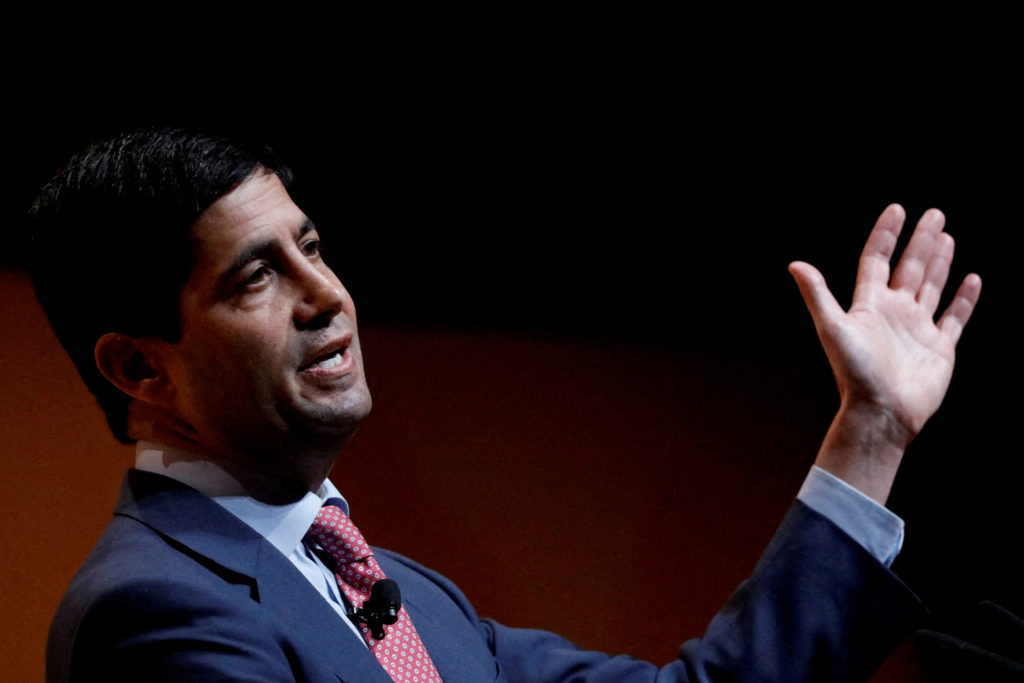
Warsh Fed Chair Nomination: Delays Amid Powell Investigation Intensify Policy Debate
The highly anticipated nomination of Kevin Warsh as Federal Reserve Chair by President Donald Trump has hit an unexpected snag, prolonging uncertainty over the future direction of U.S. monetary policy. Initially announced on January 30, 2026, as Trump’s choice to succeed Jerome Powell, the formal submission to the Senate was delayed for weeks, finally occurring on March 4, 2026. This delay stems primarily from a Department of Justice (DOJ) investigation into current Chair Jerome Powell, coupled with vocal opposition from key senators. The situation spotlights the intense political pressure on the Federal Reserve and the critical stakes involved in shaping the nation's economic future at a time of persistent inflation concerns and moderate growth.
The Stalled Nomination and Political Undercurrents
President Trump's selection of Kevin Warsh, a former Federal Reserve Governor known for his hawkish views on interest rates, signals a clear intention to steer the central bank toward a more restrictive monetary policy. This move aligns with Trump's long-standing public criticism of Powell's approach and his repeated calls for lower interest rates during his tenure. However, the path to Warsh's confirmation has proven anything but smooth. The formal nomination, which typically follows swiftly after an announcement, was held up by a DOJ investigation into Jerome Powell, concerning the renovation of Federal Reserve buildings. Powell himself announced the investigation on February 11, 2026, characterizing it as a "pretext" for political maneuvering.
Further complicating matters, Senator Thom Tillis, a Republican, has publicly vowed to block any advancement of Warsh's nomination until the investigation into Powell is fully resolved. This stance underscores the extraordinary nature of the delay, injecting an unprecedented level of political drama into what is typically a more deliberative process for appointing the nation's top monetary official. The situation raises significant questions about the independence of the Federal Reserve and the potential for executive interference in its leadership transitions. Such delays and controversies can create market volatility and uncertainty, as investors and businesses try to anticipate the Fed's next moves without a clear leader at the helm. For a deeper look at Warsh's policy leanings, read our related article: Trump Taps Kevin Warsh: The Hawkish Bet for Fed Chair.
Kevin Warsh's Extensive Fed Background and Economic Philosophy
Kevin Warsh brings a significant — and at times, controversial — track record to the table. Nominated by President George W. Bush, he was sworn in as a member of the Board of Governors of the Federal Reserve System on February 24, 2006, becoming the youngest person to serve in that role at the age of 35. He served until his resignation on March 31, 2011, making his mark during one of the most tumultuous periods in modern financial history: the 2008 financial crisis.
During his tenure, Warsh played a pivotal role as the Federal Reserve's primary liaison to Wall Street firms, working closely with the U.S. Treasury on crisis management efforts. His responsibilities included facilitating communication between the Fed and financial markets, contributing to the implementation of emergency lending programs, and supporting stabilization measures. This hands-on experience during a period of extreme economic distress positions him as a figure with deep practical understanding of central banking operations and market dynamics. Following his departure from the Fed, Warsh joined the Hoover Institution as the Shepard Family Distinguished Visiting Fellow in Economics, where he has continued to focus on monetary policy and economic research, further solidifying his expertise and influence in policy discussions. His economic philosophy is widely characterized as "hawkish," meaning he generally favors higher interest rates to combat inflation and maintain price stability, often prioritizing these goals over maximizing employment or stimulating growth. He has also been a vocal critic of the central bank's more recent, accommodative approaches, suggesting a potential shift towards tighter monetary policy if confirmed.
Navigating the Current Economic Landscape (Early 2026)
The U.S. economy in late 2025 and early 2026 presents a complex picture, one that a new Fed chair would immediately need to address. The nation has been experiencing moderate growth, with real GDP projected to expand by approximately 1.9% to 2.5% for the year. While the labor market has shown resilience, with unemployment anticipated to stabilize near 4.2% by year-end, job gains have moderated from the robust recovery periods following the pandemic. A key concern remains persistent inflation; producer price trends have exceeded expectations, signaling potential inflationary pressures in the supply chain that could eventually translate to consumer prices.
For example, the ISM Manufacturing PMI for January 2026 rose to 52, indicating expansion in the manufacturing sector—a positive sign but also one that can reflect demand-driven inflationary pressures. The challenge for the Federal Reserve, regardless of who leads it, is to balance these indicators: supporting economic growth and a healthy labor market while aggressively tackling inflation without triggering a recession. A hawkish chair like Warsh would likely prioritize controlling inflation, potentially advocating for higher interest rates or a more aggressive unwinding of the Fed's balance sheet. This approach could appeal to those concerned about the erosion of purchasing power but might face criticism from those who fear it could stifle job creation or economic expansion. For businesses and consumers, understanding these potential shifts is crucial. For instance, if the Fed moves to raise interest rates, mortgage rates, auto loan rates, and business borrowing costs are likely to increase, directly impacting household budgets and investment decisions. Conversely, if the Fed holds steady or cuts rates, borrowing becomes cheaper, potentially stimulating economic activity but also risking further inflation.
The Powell Investigation: A Precedent or a Pretext?
The Department of Justice investigation into Jerome Powell over Federal Reserve building renovations is not just a procedural hurdle; it's a significant event that could have lasting implications for the independence of the Fed. Powell's public statement that the investigation is a "pretext" implies a belief that the inquiry is politically motivated, intended to remove him or pressure him during the transition of power. Such an accusation, coming from the sitting Fed Chair, is highly unusual and deeply concerning for proponents of an apolitical central bank.
The Federal Reserve's independence from political interference is widely considered crucial for its effectiveness in managing the economy, as it allows decisions to be made based on economic data rather than short-term political expediency. An investigation, especially one that appears to be timed with a leadership change, risks eroding public trust in the institution and setting a dangerous precedent for future administrations. It could embolden future presidents to use similar tactics to influence Fed appointments or policy, thereby undermining the very foundation of its independent decision-making. The Senate's role in confirming a Fed chair is therefore even more critical in this context; they must scrutinize not only the nominee's qualifications but also the circumstances surrounding the incumbent's departure. This added layer of scrutiny contributes to the delays and makes the entire confirmation process for the Kevin Warsh Fed nomination particularly fraught.
Potential Impact of a Warsh-Led Fed
Should Kevin Warsh be confirmed as the next Federal Reserve Chair, his leadership could introduce significant changes to the Fed's monetary policy direction. Given his historical hawkish stance and his criticisms of past Fed actions, it's reasonable to expect a greater emphasis on combating inflation through potentially higher interest rates or a more restrictive balance sheet policy. This would present a direct challenge to President Trump's repeated calls for lower rates, potentially creating friction between the White House and the independent central bank. A Warsh-led Fed might also revisit the framework for inflation targeting, possibly advocating for stricter adherence to price stability mandates even if it means slower growth or higher unemployment in the short term.
For financial markets, the anticipation of a hawkish Fed often leads to increased volatility. Investors may adjust portfolios to prepare for potentially higher borrowing costs and a stronger dollar, which could impact export-oriented companies. Businesses, particularly those reliant on credit, might face higher financing expenses, affecting expansion plans and hiring. On the consumer side, mortgage rates and other loan products could see an upward trend, making borrowing more expensive. These potential shifts highlight why the selection of the Federal Reserve Chair is so closely watched and why the current delays and controversies surrounding the Kevin Warsh Fed Return: Impact on Interest Rates & Policy are of paramount importance.
The nomination of Kevin Warsh to lead the Federal Reserve marks a critical juncture for U.S. economic policy. The ongoing delays, fueled by the DOJ investigation into Jerome Powell and senatorial opposition, underscore the intense political pressures that now cloud the selection process. As the nation grapples with moderate growth, a resilient labor market, and persistent inflation, the eventual leader of the central bank will face immense challenges. Whether Warsh’s hawkish approach will provide the necessary stability or create new economic headwinds remains to be seen, but the stakes for businesses, consumers, and global markets could not be higher.